


Bitcoin
BTC · Bitcoin network
bc1qwelwgls696z3gjgx2x9tj2hj7kdy5t0k887wed
Declared martial law in 1972 and ruled as a dictator for two decades, plundering billions, before the 1986 People Power Revolution drove him out.
Ferdinand Marcos sits in the right-authoritarian part of the Caucus economy and liberty compass: centered on economy and strongly authoritarian. The clearest positions are strongly authoritarian on liberty and authority, strongly nationalist on nation and leaning traditional on culture. The profile is close to the middle on economy.
Each scale runs from one pole to the other, and the dot shows the overall tendency of this person's record and public life. These are simplified estimates and open to debate.
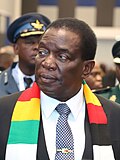 Emmerson Mnangagwa President of Zimbabwe, 2017 to present99%
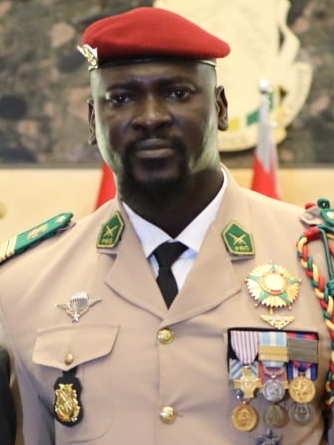 Mamady Doumbouya President of Guinea, 2021 to present99%
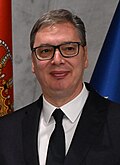 Aleksandar Vučić President of Serbia, 2017 to 202699%
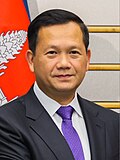 Hun Manet Prime Minister of Cambodia, 2023 to present99%
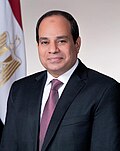 Abdel Fattah el-Sisi President of Egypt, 2014 to present99%
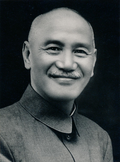 Chiang Kai-shek Leader of the Republic of China, 1928 to 197599%
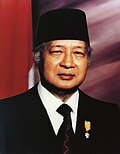 Suharto President of Indonesia, 1967 to 199898%
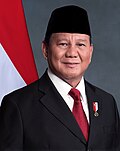 Prabowo Subianto President of Indonesia, 2024 to present98%
These links open book searches on Amazon. If you buy through them, Caucus earns a small commission at no extra cost to you. They have no influence on where anyone is placed on the map.
As an Amazon Associate I earn from qualifying purchases.
Percentages show how close two profiles are across all ten dimensions. Including a person here is for study and comparison, not approval. Portrait: Malacañang Press, Public domain, via Wikimedia Commons; see all photo credits.
Caucus is free, has no ads and collects nothing about you. If it helped you learn something, you can chip in with crypto.
Our goal is simple: to help people understand politics, not just react to it. Democracies work better when citizens can tell a policy from a slogan, know where leaders actually stand and are able to meet ideas they disagree with. Political literacy is what protects us from manipulation and polarization, and it is the first step to taking part in public life. Caucus turns ten dimensions, hundreds of leaders and thinkers and every country's political history into something you can explore in minutes, and keeps it free and private for everyone. Your donation keeps it independent, ad-free and growing.
BTC · Bitcoin network
bc1qwelwgls696z3gjgx2x9tj2hj7kdy5t0k887wedETH · Ethereum network
0x743b3c61b176aacB4ec2cc409992e37675e87D1CSOL · Solana network
FbrjwgdExzcssqLJmytYaNYMpQ7MgmMzmbWk35rLyd3hUSDT · USDC · BNB · POL · Ethereum, Base, Arbitrum, Polygon or BNB Chain
0x743b3c61b176aacB4ec2cc409992e37675e87D1CCheck that the network matches before sending: funds sent on the wrong network cannot be recovered.